How to Speed Up a WordPress Website: 12 Practical Fixes


A fast website feels more professional, keeps visitors engaged, and gives every marketing channel a better chance to work. When a WordPress page takes too long to load, people may leave before they understand the offer, read a service description, or reach the contact form. That is why learning how to speed up a WordPress website is not only a technical task. It is a business improvement.
Most slow WordPress websites do not have one single problem. They usually have several smaller issues working together: oversized images, weak hosting, too many plugins, heavy Elementor sections, third-party scripts, unoptimized fonts, and a database that has collected unnecessary data. The best results come from testing the website, fixing the biggest bottlenecks first, and measuring again after each important change.
1. Measure the Website Before You Change Anything
Start with a clear baseline. Test the homepage, an important service page, a blog post, and any landing page that receives paid or organic traffic. Google PageSpeed Insights can show both laboratory results and real-user data when enough data is available. GTmetrix and browser developer tools can provide additional details about large files, slow requests, and scripts that block rendering.
Do not focus only on one performance score. Pay attention to how the website feels on a normal mobile connection and review Google's Core Web Vitals:
- Largest Contentful Paint, or LCP, measures how quickly the main content becomes visible.
- Interaction to Next Paint, or INP, measures how quickly the page responds to user interactions.
- Cumulative Layout Shift, or CLS, measures whether content moves unexpectedly while the page loads.
Google recommends aiming for LCP within 2.5 seconds, INP below 200 milliseconds, and CLS below 0.1. These are useful targets, but the real goal is a website that loads quickly, remains stable, and responds without delay.
2. Optimize Images Before Uploading Them
Images are one of the most common causes of slow WordPress pages. A photograph exported directly from a camera or design tool can be several megabytes even when it is displayed at a much smaller size on the website.
Resize each image close to its actual display dimensions before uploading it. Compress it, remove unnecessary metadata, and use a modern format such as WebP when appropriate. A hero image should be carefully optimized because it often becomes the Largest Contentful Paint element. Smaller images below the first screen can usually use lazy loading so they are downloaded only when the visitor approaches them.
Avoid using a 2500-pixel image inside a 500-pixel card. Also check background images in Elementor, because they may not receive the same responsive image treatment as a normal Image widget. Where possible, use the Image widget with properly generated sizes, descriptive filenames, and useful alt text.
3. Improve Hosting and Server Configuration
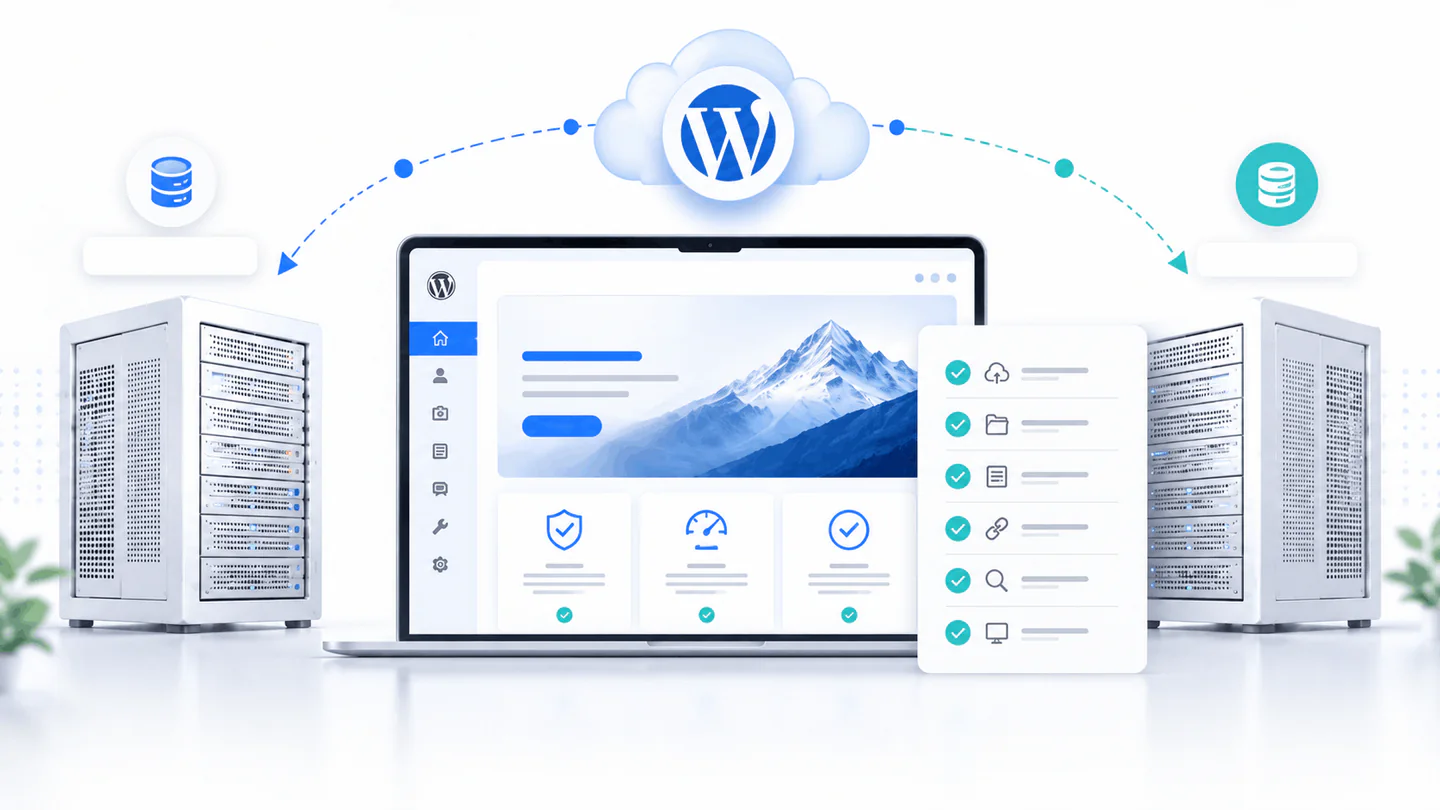
A well-built website can still feel slow on an overloaded or poorly configured server. Hosting affects the time WordPress needs to process PHP, connect to the database, and return the first part of the page.
Review the PHP version, memory limit, storage usage, server location, and whether the hosting plan provides modern caching options. If most visitors are in Europe, a server located far away can add unnecessary delay. A content delivery network can reduce distance for static files, but it cannot fully compensate for a weak origin server.
Shared hosting may be enough for a small brochure website, but a busy WooCommerce store or plugin-heavy Elementor website may need more CPU, memory, and better database performance. Before upgrading, confirm that the website itself is clean; otherwise, a larger hosting plan may only hide inefficient code temporarily.
4. Configure Page Caching Correctly
Without page caching, WordPress may rebuild a page for every visitor by running PHP and database queries repeatedly. A good caching setup stores a ready-to-serve version of the page and sends it much faster.
Depending on the hosting environment, caching may be handled by the server, a WordPress plugin, or both. Avoid enabling several overlapping cache systems without understanding how they interact. Configure browser caching for static files, use compression, and test logged-out pages after every change.
WooCommerce carts, account pages, checkout pages, and other personalized areas must be excluded from full-page caching. Contact forms, cookie tools, and dynamic content also need testing so speed improvements do not break functionality.
5. Use a CDN Where It Provides Real Value
A content delivery network stores copies of static assets such as images, CSS, and JavaScript in multiple locations. Visitors can receive those assets from a location closer to them. This is especially useful when a website serves users in several countries.
A CDN can also reduce load on the main server and provide security features. However, it should be configured carefully. Aggressive script optimization, automatic minification, or features such as script loaders can sometimes conflict with Elementor, forms, analytics, or consent tools. Enable one feature at a time and test the front end, editor, forms, and checkout process.
6. Audit Plugins, Add-ons, and Third-Party Scripts
Every plugin is not automatically slow, but every plugin can add code, database queries, styles, scripts, or scheduled tasks. Over time, websites often collect duplicate tools: multiple form plugins, several Elementor add-on packs, abandoned sliders, old backup plugins, and tracking scripts that are no longer used.
Create a full plugin list and ask three questions about each item:
1. Is it actively used?
2. Is it maintained and compatible with the current WordPress setup?
3. Can its job be handled by an existing tool or a small custom solution?
Remove unused plugins completely after creating a backup. Then review third-party scripts such as chat widgets, maps, social feeds, advertising tags, video embeds, and heatmaps. These scripts connect to external servers and can delay page loading even when WordPress itself is optimized.
7. Build Cleaner Elementor Pages
Elementor can produce fast, professional websites when the layout is planned carefully. Performance problems often appear when pages contain deeply nested sections, too many containers, repeated widgets, large background videos, excessive motion effects, and several add-on libraries.
Use containers with a simple structure, reuse global styles, and remove empty elements. Keep animations subtle and avoid applying motion effects to every section. Build reusable templates for headers, footers, calls to action, and service cards instead of rebuilding similar blocks with different settings on every page.
Also review the mobile version separately. Hiding a heavy desktop section on mobile does not always mean the browser avoids downloading every related asset. When a section is unnecessary, remove it or replace it with a lighter mobile-specific solution.
8. Reduce Font and Icon Overhead
Several font families and many font weights can create multiple additional downloads. Most business websites can achieve a strong visual hierarchy with one primary family and a limited number of weights. Host fonts locally when appropriate, preload only the files needed above the fold, and use a system-font fallback.
Icon libraries can also add unnecessary code. If the website uses only a few icons, consider SVG icons instead of loading a complete library. Keep brand consistency, accessibility, and licensing in mind when making the change.
9. Optimize CSS and JavaScript Carefully
Minification removes unnecessary characters from files, while deferred or delayed loading changes when scripts are executed. These methods can improve performance, but they can also break menus, sliders, forms, popups, cookie banners, and tracking.
Do not turn on every optimization option at once. Enable one change, clear all caches, and test the website in a private browser window on desktop and mobile. Confirm that the Elementor editor still works and that conversions are still tracked correctly.
The most valuable improvement is often not combining files. Modern browsers handle multiple requests efficiently. Removing unused code and preventing unnecessary scripts from loading on every page can provide a cleaner result than aggressive file combination.
10. Clean the Database and Review Autoloaded Data
WordPress databases grow with revisions, expired transients, spam comments, deleted plugin settings, abandoned tables, and scheduled tasks. Database cleanup can improve administration and reduce unnecessary work, but it must be performed with a current backup.
Pay particular attention to autoloaded options. These settings load on every WordPress request, so an unusually large autoloaded dataset can slow the entire website. Identify which plugin or theme created the largest entries before deleting anything. Database optimization is an area where careful diagnosis is more important than one-click cleanup.
11. Protect Speed While Adding Analytics and Marketing Tools
Google Analytics, Google Ads, Meta Pixel, consent platforms, live chat, and conversion tools may be important for the business. Removing all tracking is rarely realistic. Instead, load only the tools that support an active decision or campaign.
Use a tag-management plan, remove old properties, and prevent duplicate tracking. Make sure consent settings are correct for the markets you serve. Test whether form submissions, purchases, and thank-you pages still record conversions after performance changes.
12. Test Real Pages on Real Devices
A speed test can miss usability problems. Open the website on a mid-range phone, use mobile data, and complete the actions that matter: open the menu, read a service page, submit a form, add a product to the cart, and reach checkout.
Check for delayed buttons, layout jumps, unreadable text, blocked content, and popups that cover the screen. Performance work is successful when the website feels faster and the business journey still works.
A Practical WordPress Speed Optimization Order
For most websites, this order produces the clearest improvements without creating unnecessary risk:
1. Create a full backup and staging copy.
2. Measure the important pages.
3. Optimize hero images and other large media.
4. Configure reliable page and browser caching.
5. Remove unused plugins and scripts.
6. Simplify Elementor structure and animations.
7. Review hosting, PHP, database, and autoloaded options.
8. Add a CDN when the audience or traffic justifies it.
9. Test forms, tracking, mobile layouts, and checkout.
10. Monitor Core Web Vitals and conversions after deployment.
When Should You Hire a WordPress Speed Optimization Expert?
Professional help is useful when the site is commercially important, the changes affect WooCommerce or lead generation, the hosting stack is complex, or previous optimization plugins have created conflicts. An experienced WordPress and Elementor developer can identify whether the bottleneck comes from the server, theme, plugin stack, page structure, database, or external scripts.
The objective should not be a temporary high score. It should be a stable, maintainable, fast WordPress website that your team can continue to update.
Frequently Asked Questions
Why is my WordPress website suddenly slow?
A recent plugin update, new tracking script, large image, traffic spike, database issue, or hosting problem may be responsible. Compare the timing of the slowdown with recent changes and test on a staging copy before disabling important features on the live site.
Does Elementor make WordPress slow?
Elementor itself is not automatically slow. A page becomes heavy when it uses unnecessary widgets, add-ons, nested structures, videos, animations, fonts, and scripts. Clean design and careful optimization can produce a fast Elementor website.
Is a perfect PageSpeed score necessary?
No. A perfect laboratory score is not the main business goal. Focus on good Core Web Vitals, fast real-world loading, stable layouts, responsive interactions, and a conversion path that works correctly.
Can I speed up WordPress without changing the design?
Often, yes. Image compression, caching, hosting improvements, plugin cleanup, font optimization, and script management can make a large difference. However, an extremely heavy layout may need design changes to achieve a major improvement.
Final Thoughts
The best way to speed up a WordPress website is to combine technical optimization with cleaner design decisions. Start with measurement, fix the largest files and slowest requests, simplify the plugin and Elementor setup, and test every important user journey.
If your website is slow, unstable, or difficult to optimize safely, send me the URL. I can review the WordPress, Elementor, hosting, and plugin setup and recommend the clearest next step through a secure Upwork project.
Continue Planning Your Website
WordPress Speed Optimization
Improve WordPress speed with optimized images, caching, cleaner plugins, and lighter page structure. Faster loading supports SEO, UX, and conversions.
Explore Service Case StudyNu-tility Website
A completed business website project for an energy infrastructure company, focused on a professional digital presence and clear service positioning.
View Case Study GuideComplete WordPress Website Maintenance Checklist for Small Businesses
A practical WordPress maintenance checklist for small businesses covering weekly, monthly, quarterly, and annual website care.
Read Guide